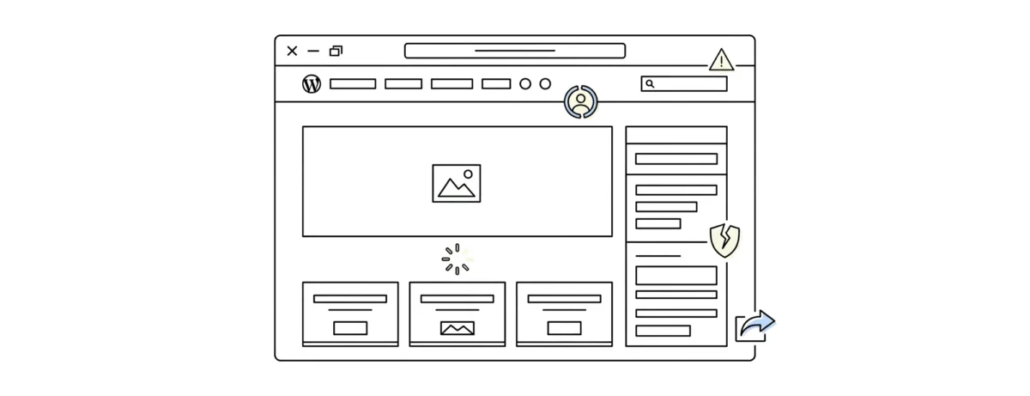
6 Signs That Your WordPress Site Has Been Compromised
About 15 million sites around the world run on WordPress, and that is only a conservative estimate. This platform is today the undisputed leader of the CMS market with a 60 percent share. But there is bad news too: WordPress is especially popular not only with ordinary users but also with hackers. Sucuri, a leading internet security company, reported that 78 percent of the 11,485 hacked sites in the first three months of 2016 were running WordPress.
Online attackers do not care how big your site is, how many people visit it or how much profit it brings you. If you are online, you can be hacked. These six warnings will help you determine whether someone has hacked your site recently and will also help you take appropriate measures to drive the unwanted guests out of your online home.
1) You cannot log in. The first warning sign is when you cannot get into your site. Hackers often steal login details through brute force. They use automated programs that try thousands of password/username combinations. And as soon as they get inside, they change your administrator rights so that you cannot fix the situation. Or they simply delete your account.
2) Your site has become unusually slow and unresponsive. If your site has started to lag, the cause may be hackers trying to get into your site using brute force. Another option is a DDoS attack, when a pile of computers send your site a mass of requests – far more than your server can handle. Either of these two can slow down your site, make it unresponsive or take it down altogether. If you manage several sites at once, use Pingdom to measure the speed of each of them. It is a free online tool that lets you check your site’s speed from different locations. Also look through your server logs from time to time to identify IP addresses that send too many requests. Then block them. If you are sure your site has not been hacked, it makes sense to check your plugins, scripts and hosting settings.
3) You cannot send and receive emails. Hackers like to use your own site against you. If they use your site or sites to send out huge amounts of spam, you will start to experience certain freezes and in the end you will not be able to receive and send emails.
4) Your page displays the content of another site. Hackers very often set up redirects to other sites. You open your site, want to show it to a business partner, it seems to load and then – whoops – you land on a completely different site. This means that someone has already managed to dig around in your code, gaining unauthorized access to the site.
5) Google flags your site as unsafe. The caring search engine often warns its users if a site is infected. In this case you can lose quite a few potential customers, since everyone will know that your site distributes malware, steals information or otherwise does harm.
6) Your host takes your site offline. Most hosts will immediately notify you that your site has been removed from the service. Besides being used against people who do not pay for hosting on time, this measure also applies to infected sites, because if such a site is left to its own devices, the infection can spread to the server, creating a chain reaction.
Our specialization is WordPress website development and maintenance. Contact us for a free consultation — [email protected], +371 29394520
