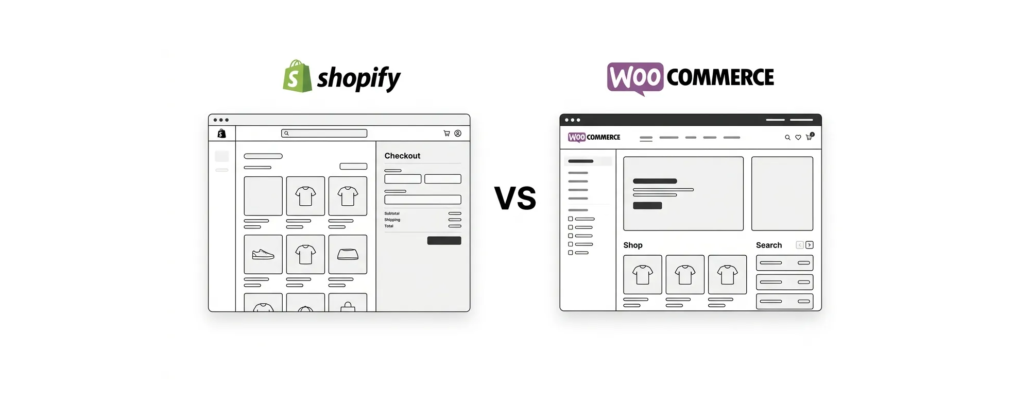
Shopify vs WooCommerce for Latvian Businesses: Which Platform Should You Choose?
Choosing an e-commerce platform is one of the important decisions when launching or improving an online store. The platform affects not only how the store looks, but also how easily you can manage products, accept payments, connect delivery services, improve SEO, and adapt the website as your business grows.
For Latvian businesses, the choice often comes down to two popular options: Shopify and WooCommerce. Both can power successful online stores, but they take very different approaches. Shopify is a hosted e-commerce platform where the technical infrastructure is managed for you. WooCommerce is built on WordPress and gives you more control over your website, but also requires more responsibility for hosting, updates, and maintenance.
Neither platform is automatically better — the right choice depends on your business needs, technical resources, budget, and plans for the future.
Shopify and WooCommerce: The Main Difference
The biggest difference between the two platforms is how much control and responsibility you want to have.
Shopify is a complete e-commerce service where hosting, security, updates, and much of the technical infrastructure are handled for you. You pay a monthly subscription, with plans starting at around €30 per month, and manage your store through Shopify’s interface.
This approach makes Shopify attractive for businesses that want to start selling quickly without dealing with technical maintenance. Many common e-commerce features are available through Shopify itself or through additional apps.
WooCommerce takes a different approach. It is an e-commerce plugin for WordPress, meaning it works together with an existing WordPress website. The plugin itself is free, but you need to choose hosting, manage updates, and build your store using WordPress themes and plugins.
For a small business store, suitable WooCommerce hosting may start at around €10–20 per month, although costs depend on performance requirements, traffic, and the services you need. Additional expenses may include premium themes, plugins, security tools, and technical maintenance.
The advantage of WooCommerce is flexibility. You have much more control over how the store works, but you also have more decisions to make.
Ease of Use: Shopify Is Simpler, WooCommerce Gives More Control
For business owners who want to launch quickly, Shopify is usually easier to set up. The platform provides the hosting environment, store management interface, and many built-in e-commerce features.
You do not need to choose a hosting provider, install WordPress, or manage compatibility between different website components. This can save time, especially for businesses without internal technical knowledge.
WooCommerce requires more involvement during setup. You need to choose hosting, configure WordPress, select a suitable theme, install required plugins, and make sure everything works together correctly.
Although the initial setup is more demanding, this flexibility can become an advantage when a store has specific requirements.
For example, a business may need a customised checkout process, specific product options, integration with accounting software, or unique delivery rules. In these situations, WooCommerce often provides greater flexibility than standard out-of-the-box solutions.
Costs: Subscription vs Ownership
The cost difference between Shopify and WooCommerce is not only about the initial price. It is also about what is included and who manages the technical side.
Shopify uses a predictable subscription model. A basic store starts at around €30 per month, but the total cost can increase when additional functionality is needed.
For example:
- premium Shopify themes may cost around €100–400 one-time;
- paid apps can add approximately €5–50+ per month, depending on functionality;
- custom development or integrations require additional investment.
WooCommerce itself is free, but running a store involves other costs:
- hosting: approximately €10–50 per month depending on performance requirements;
- domain name: around €10–20 per year;
- premium themes: approximately €50–200 one-time;
- paid plugins or extensions: often €50–300+ per year, depending on functionality;
- development or maintenance work if the store requires custom work.
The cheaper option depends on the type of store. A simple Shopify store may cost less than a heavily customised WooCommerce store, while a business that needs extensive store customisation and custom functionality may find WooCommerce more cost-effective long term.
Payments and Local Requirements in Latvia
For Latvian businesses, integrations with local payment providers and delivery services are often among the most important factors when choosing an e-commerce platform.
Depending on the business, a store may need integrations with:
- local payment providers such as MakeCommerce or Klix;
- payments from Latvian banks such as Swedbank, SEB, Citadele, or Luminor;
- delivery services operating in Latvia and the Baltic region, such as Omniva, DPD, or Venipak.
Both platforms can support many integrations, but availability and setup complexity can differ.
Shopify typically relies on pre-built apps and integrations. This works well when the necessary service is already available, but some Latvia-specific features may require additional apps or custom development.
WooCommerce offers greater flexibility because developers can create or modify integrations directly within the WordPress environment. This can be especially useful for businesses that need connections with local accounting systems, warehouse software, delivery providers, or other internal business processes.
For a small online store with standard requirements, either platform can work well. Businesses with more specific local requirements may benefit from the additional flexibility that WooCommerce provides.
SEO and Content: Why WooCommerce Can Be Stronger for Content-Driven Businesses
For many businesses, an online store is not only a place where customers buy products. It is also a tool for attracting visitors through search engines and building trust before a customer makes a purchase.
This is where WooCommerce can have an advantage because it is built on WordPress — a platform originally designed for managing content. This makes it especially suitable for businesses that combine e-commerce with a substantial amount of educational or marketing content.
For example, a Latvian company selling gardening equipment could create seasonal guides, product comparisons, and educational articles that link naturally to relevant products. Over time, these pages can attract visitors who are searching for information before they are ready to make a purchase.
WordPress gives businesses more flexibility when building larger content structures, such as detailed guides, resource sections, landing pages, and interconnected product categories. This can be valuable for companies that rely on organic search traffic as an important part of their marketing strategy.
Shopify also provides solid SEO and content marketing features, including product optimisation, metadata, URLs, and blog articles. For businesses that mainly need a straightforward online catalogue with supporting content, Shopify may provide everything they need. However, companies that want to develop a content-rich website alongside their online store may find the WordPress and WooCommerce combination more flexible.
Maintenance and Security
Maintenance is one of the biggest differences between Shopify and WooCommerce.
With Shopify:
- hosting is included;
- server security is handled by Shopify;
- platform updates are managed automatically;
- technical infrastructure is maintained by the provider.
This reduces the amount of technical work required from the business owner. However, Shopify users still need to manage store settings, apps, product data, and any third-party integrations.
WooCommerce gives more control, but the website owner is responsible for keeping different parts of the system working together.
A WooCommerce store relies on several layers, including:
- WordPress core;
- WooCommerce itself;
- the active theme;
- installed plugins;
- the hosting environment;
- the PHP version running on the server.
All these components need to remain compatible for the website to function correctly. For example, an outdated plugin may stop working after a WordPress update, or a theme may require adjustments after changes to WordPress or other connected components.
Because changes to one part of the system can affect another, WooCommerce websites require regular maintenance and testing. This typically includes keeping WordPress, plugins, and themes up to date, creating backups before making changes, and verifying that essential store functions, such as payments and checkout, continue to operate correctly.
For a more detailed overview of what ongoing WordPress maintenance involves, see our guide.
Security is another area where the difference between the platforms becomes noticeable. With Shopify, much of the technical security infrastructure, including server-level protection and security updates, is managed by the platform. With WooCommerce, businesses have greater control over their website’s environment, but they are also responsible for keeping it secure. This includes choosing reliable hosting, using trusted extensions, and configuring appropriate security measures.
WooCommerce is not inherently less secure than Shopify. Instead, the additional flexibility it offers also means that businesses take greater responsibility for how their website is maintained, configured, and protected.
Which Platform Is Better for a Latvian Business?
Shopify may be a better choice if:
- you want to launch quickly;
- you prefer predictable monthly costs;
- you do not want to manage technical maintenance;
- your store requirements are relatively standard.
WooCommerce may be a better choice if:
- you already use WordPress or want a content-focused website.;
- you need custom functionality;
- your business depends on content marketing;
- you need integrations tailored to your processes;
- you want full control over your website.
For businesses that need a more customised online store, working with an experienced e-commerce development team can make it easier to handle integrations, custom functionality, and future growth.
Conclusion
Both Shopify and WooCommerce can be good choices for Latvian businesses. The decision is less about which platform is universally better and more about how much control, flexibility, and technical management your website requires.
Shopify is a strong option for businesses that want a simpler, managed solution with predictable costs. WooCommerce is a strong option for businesses that need flexibility, deeper customisation, and a closer connection between e-commerce and content marketing.
Before choosing a platform, consider not only how you want your store to work today, but also what your business may need in the future. A platform that fits your current goals while allowing room for growth will usually be the better long-term choice.
Our specialization is WordPress website development and maintenance. Contact us for a free consultation — [email protected], +371 29394520
