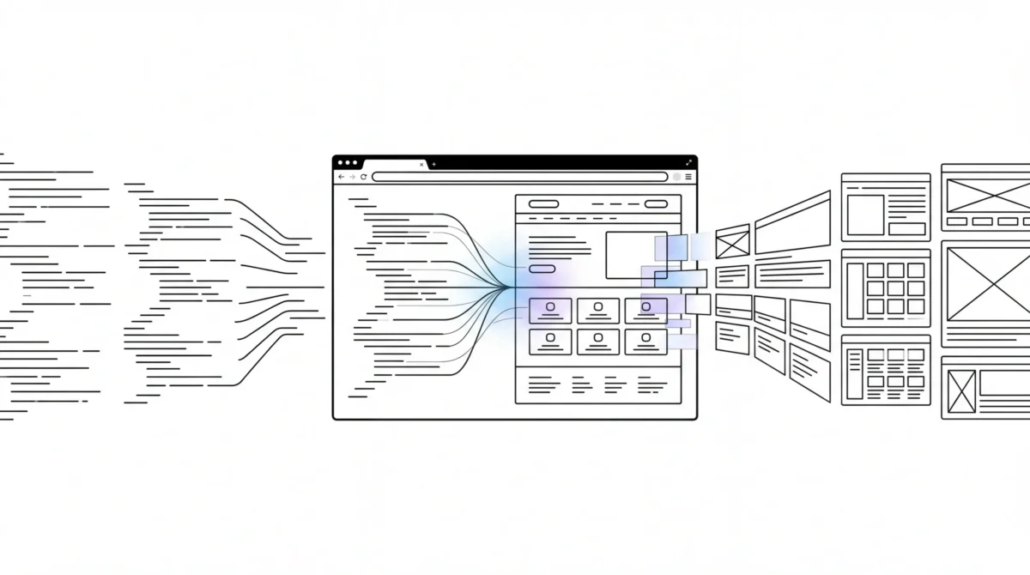
AI in Action: Insights from Our Projects with Cursor, Stitch, and Claude
The world of web development is evolving fast, and AI is starting to play a major role in how we design, code, and maintain websites. In this article, we want to share our hands-on experience using AI tools like Cursor, Stitch and Claude, and show how they helped us build modern, fully functional websites faster than ever before.
Instead of treating AI as a one-size-fits-all solution, we approached each project differently—using the right combination of tools depending on the complexity, goals, and technical requirements. From a simple landing page to a full e-commerce platform, these examples show how AI can support different stages of development as part of our web development services.
AI Tools for Web Development: Cursor, Stitch, Claude
Cursor is an AI coding assistant designed to help developers write, debug, and update code efficiently. It works directly inside the editor and can generate frontend and backend code in multiple languages. With its Auto Mode, Cursor can build entire pages or features from high-level instructions, significantly reducing repetitive implementation work and speeding up development cycles.
Stitch focuses on the design side of the workflow. It allows us to quickly create clean, structured web layouts without manually writing large amounts of CSS. These designs can then be exported and connected directly into a development workflow, making it easier to translate visual ideas into functional interfaces.
Claude adds a different dimension to this process, especially when it comes to architecture, system design, and complex refactoring. It is particularly useful for reasoning through larger problems, restructuring applications, and helping define how different parts of a system should work together before implementation.
When used together, these tools create a flexible workflow that spans design, development, and system thinking. Instead of moving step-by-step in a traditional linear process, we can iterate faster—going from concept to implementation more fluidly, while using AI where it provides the most value, whether that is UI generation, backend logic, or API-driven functionality.
In addition to development tools like Cursor, Stitch and Claude, we also integrate AI directly into products using APIs such as OpenAI, depending on the project requirements.
Case Studies: From a Simple Site to Scalable Web Platforms
To better understand how AI fits into real development workflows, we explored four projects with different levels of complexity. Each one uses a slightly different combination of tools—Cursor, Stitch, Claude, and AI integrations—depending on the goals and technical requirements.
ComaCloud: Simple, Fast, and Fully AI-Driven
ComaCloud was our first hands-on experiment with an AI-assisted workflow. The goal was to launch a clean and functional hosting website quickly, without overcomplicating the stack.
For the tech stack, we kept it simple: HTML, CSS, and JavaScript. The design was created in Stitch, and the coding was handled by Cursor’s Auto Mode.
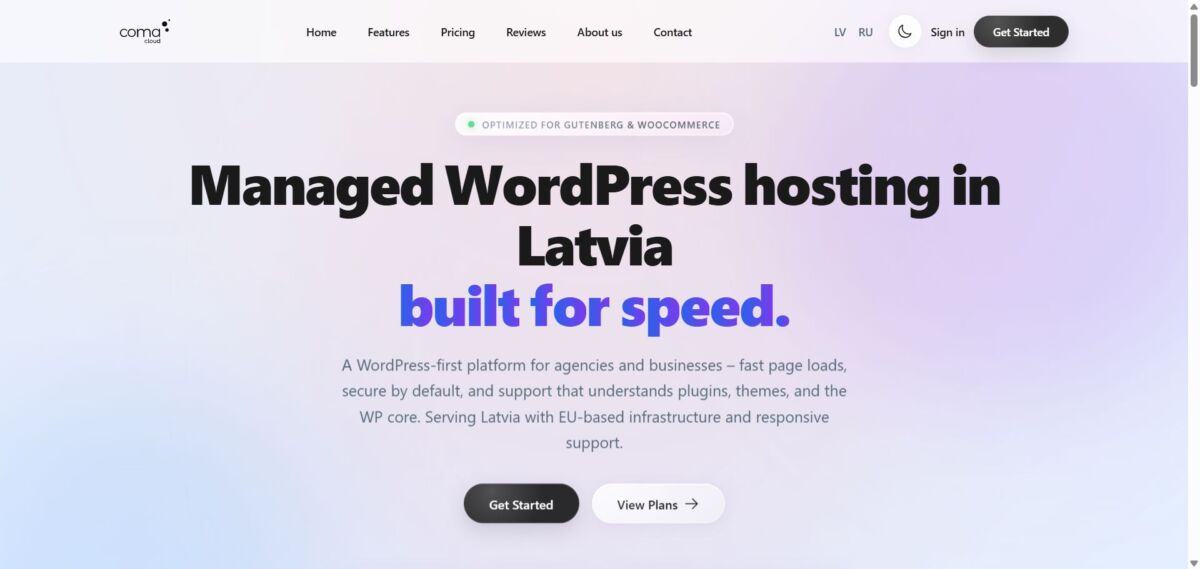
The result: https://comacloud.lv/
Timeline: 2–3 days from design to live site
The result is a lightweight and responsive website with dark and light modes, smooth animations, and a fully automated deployment pipeline. Once changes are pushed via Git, updates go live in seconds through Cloudflare.
Cursor allowed us to quickly turn a visual concept into a live website with minimal manual coding, which was incredibly efficient and impressive.
ProMusic: A Complete Audio Equipment E-Commerce Platform
Next, we tackled a more complex project for a client specializing in audio equipment sales and rentals. The original solution was a WordPress site, but it didn’t offer the modern UX/UI or flexibility the client wanted. We decided to rebuild the site from scratch using AI, giving the platform a fresh look and full functionality.
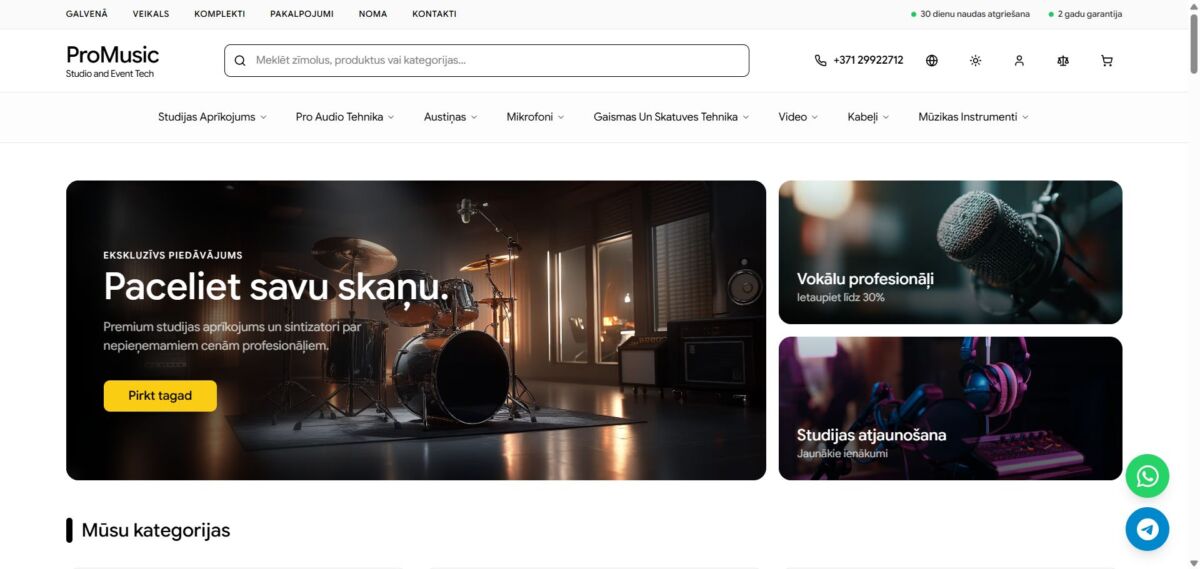
The result: https://promusic.lv/
The platform was rebuilt using a Node.js backend and a Next.js + TypeScript frontend, forming a complete e-commerce system.
Features:
- The platform includes a fully functional admin area where products, rentals, and stock can be managed in a simple and intuitive way.
- It supports flexible promotions, allowing the creation of promo codes and special offers whenever needed.
- Customers and staff stay informed through automated email and Telegram notifications about new orders and updates.
- Product data is kept up to date through daily XML imports and synchronization with supplier feeds.
- The website supports multiple languages, with Latvian already available and additional languages planned for the near future.
- Each product page is enriched using OpenAI, generating detailed descriptions, specifications, and additional characteristics automatically.
- Relevant YouTube videos are automatically pulled for each product, giving customers a clearer view of how they look and perform in real use.
- During checkout, the system automatically verifies VAT information and adjusts the required fields accordingly.
- The overall customer experience is streamlined with Google authentication, a smooth checkout flow, and clear order tracking.
- A Telegram bot allows the team to receive new orders instantly and update their status directly from the chat.
- Errors are monitored through Sentry, and when something appears, it can be quickly investigated and resolved with the help of Cursor, with fixes deployed automatically via GitHub Actions.
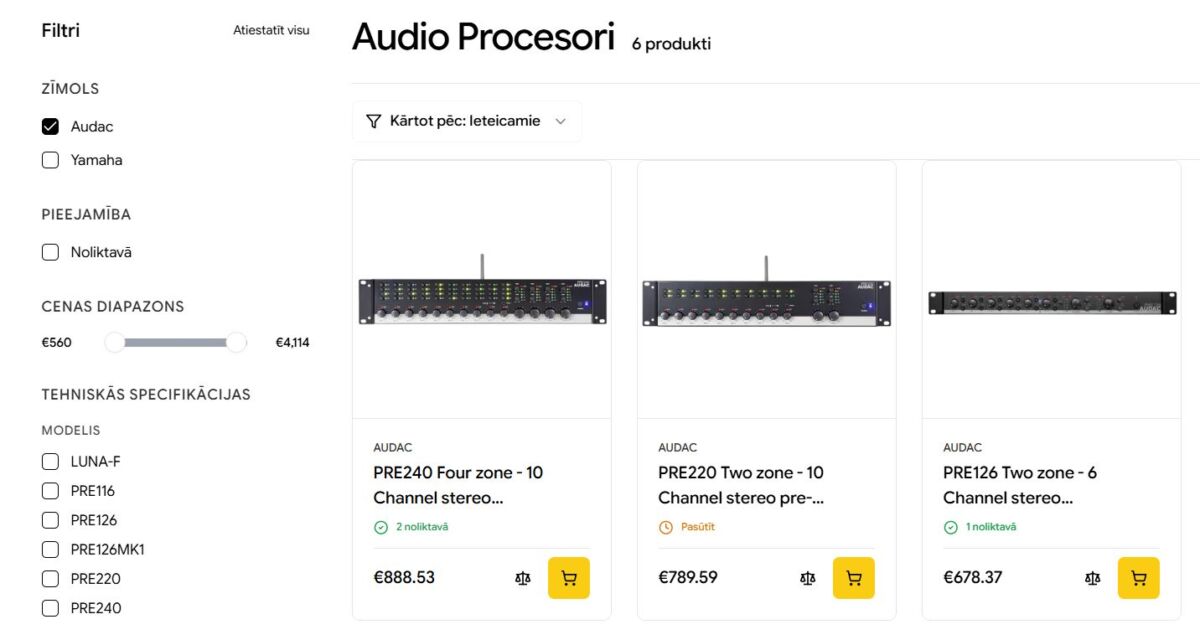
Timeline: Around 2 weeks of intensive work.
The AI integration allowed us to enrich product pages dynamically, though we had to fine-tune some details—AI sometimes generates more information than necessary, and we curated it to optimize the user experience.
Mājaslapu Serviss: Rebuilding a Service Website with Claude
We also explored a slightly different AI-driven approach while rebuilding a service website we run ourselves as part of our agency ecosystem. It focuses on technical maintenance of WordPress websites for companies and agencies in Latvia, covering updates, security, backups, and monitoring under a fixed monthly fee.
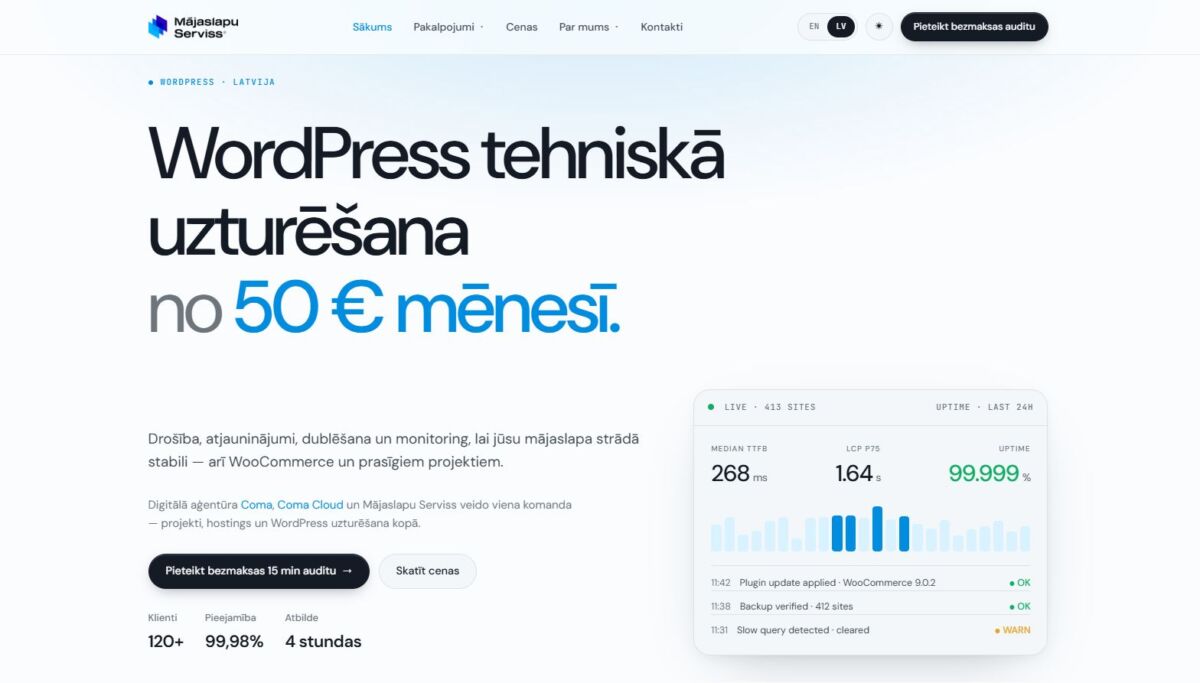
The result: https://majaslapuserviss.lv/
For this project, instead of Cursor and Stitch, we used Claude Code together with Claude Design to handle both development and design decisions. The goal was to completely rethink the structure, performance, and overall user experience of the site.
The result is a modern, lightweight platform built with performance and SEO in mind:
- The frontend is built using React as a component-driven single-page application, with full bilingual routing for Latvian and English users.
- The project uses Vite as a build tool, compiling multiple pages into optimized production bundles with hashed assets for better caching and performance.
- Hosting is handled through Cloudflare Workers and Assets, delivering content globally with extremely fast response times and no cold starts.
- The design system is fully custom-built with CSS, using variables for consistency, supporting both dark and light modes, and even offering different density settings depending on user preference.
- Carefully selected Google Fonts help create a clean and modern visual identity across the site.
- Structured data (JSON-LD) is implemented throughout the site, improving how content appears in search engines with rich results.
- A full SEO layer is in place, including sitemap configuration with language alternates, proper meta tags for social sharing, and a strict security setup.
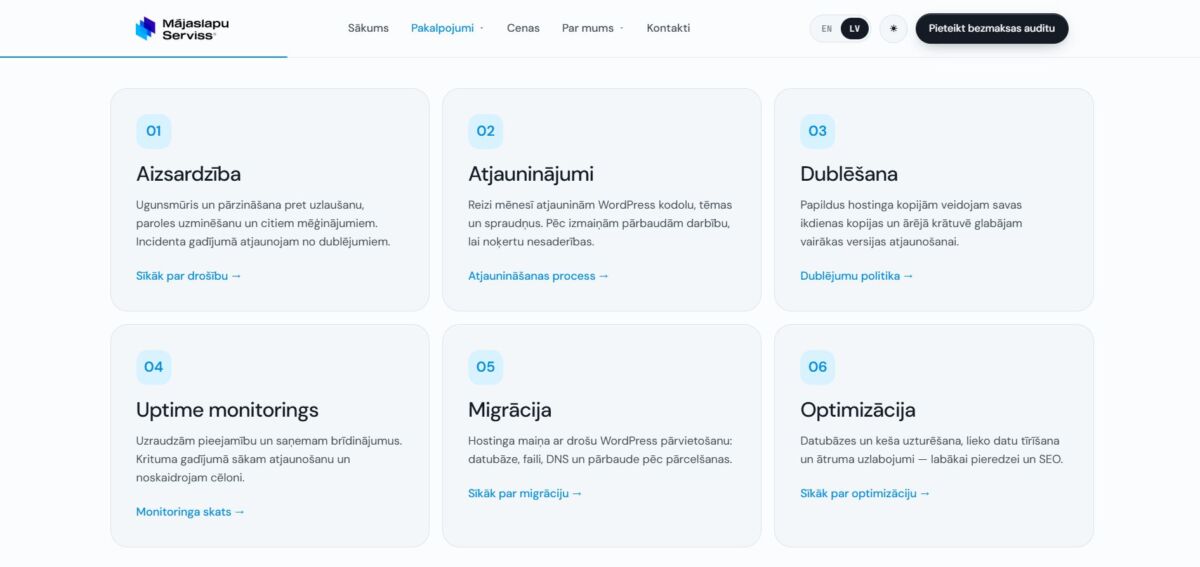
This project shows a slightly different angle of AI in web development—not just speeding up coding, but helping rethink architecture, performance, and long-term scalability from the ground up.
Lensfit: High-Performance E-Commerce with AI and Search Optimization
Another project where we pushed both AI and engineering further was the rebuild of an e-commerce platform for contact lenses.
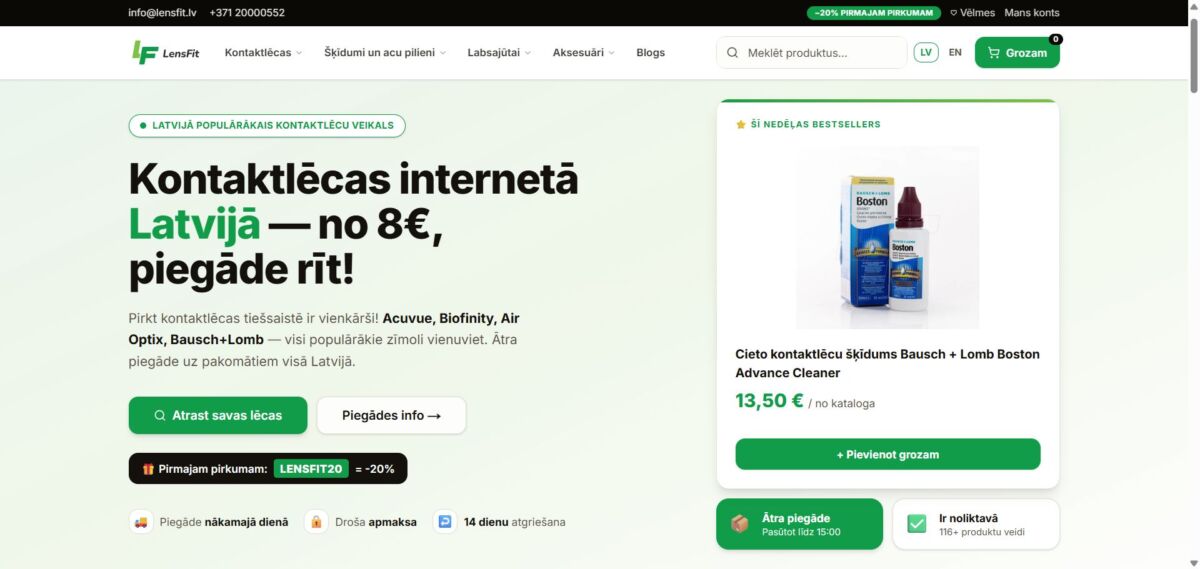
The goal here wasn’t just to improve design, but to create a fast, scalable, and intelligent shopping experience, moving beyond the previous WordPress-based solution to a more tailored architecture.
The platform was built using a Next.js + TypeScript stack, with a strong focus on performance, search, and reliability.
- The frontend is built with the latest Next.js architecture (App Router) and React, delivering a fast and responsive user experience across the entire site.
- Product data, orders, and customer accounts are handled through Prisma with a PostgreSQL database, ensuring a solid and scalable backend.
- Content such as pages and media is managed through Strapi, allowing flexible content updates without touching the core application.
- Product search is powered by Meilisearch, providing fast, typo-tolerant results and suggestions, with a fallback system that keeps search functional even if the service is unavailable.
- OpenAI is integrated directly into the platform to power a streaming comparison feature, allowing users to explore differences between contact lenses in a structured and easy-to-understand format.
- The checkout and order system includes automated email handling and generates proper PDF invoices with full Latvian language support, including diacritics.
- The platform includes strong technical foundations, such as security headers, error monitoring with Sentry, and sanitized dynamic content to ensure stability and safety.
- Structured data and SEO-focused architecture are implemented throughout the site, improving visibility in search engines and supporting rich results.
- The website supports both Latvian and English, making it accessible to a broader audience.
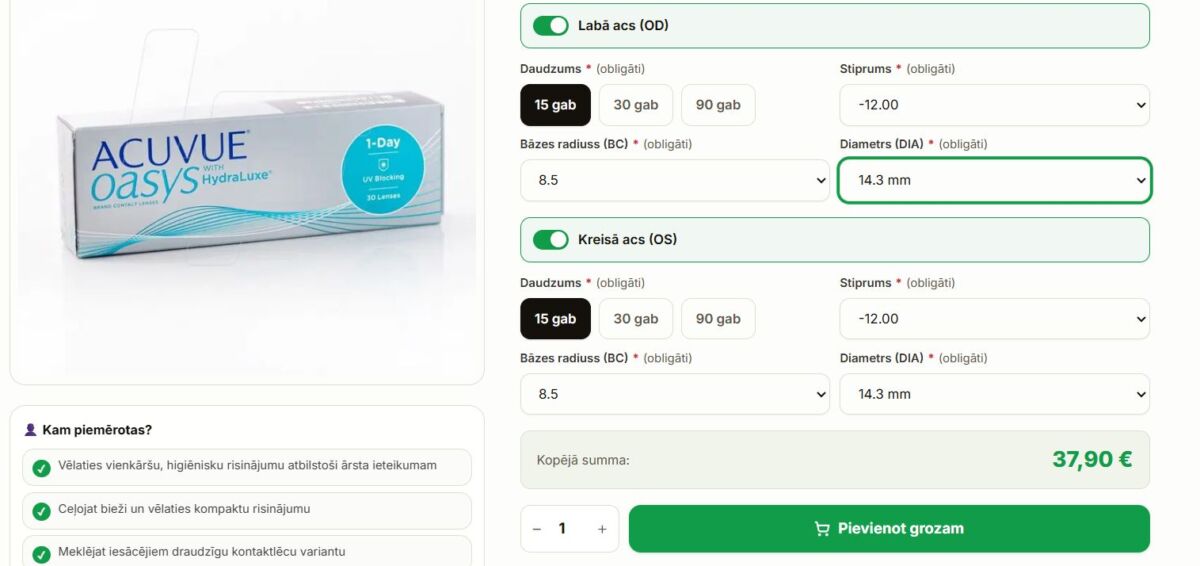
In addition to development, we also performed an SEO audit comparing the previous WordPress version with the new Node.js-based solution. The results confirmed significant improvements in performance, structure, and overall search readiness.
This project highlights how AI can be combined with modern architecture—not just to speed up development, but to build smarter features and create a more advanced user experience.
Our Review: How AI Changed Our Workflow
AI tools have the potential to dramatically change how we approach web development. They can help:
- Speed up workflows: Small sites like ComaCloud can now go live in days instead of weeks.
- Reduce repetitive coding: Automation frees developers to focus on UX, design, and functionality.
- Enhance scalability: Even complex projects can benefit from AI-assisted content, data handling, and automated updates.
- Explore new possibilities: Developers can experiment with AI to improve quality and efficiency in both small and large projects.
Our experience shows that AI is not replacing developers—it’s a powerful assistant that can accelerate development and improve quality. For small to medium projects, we’re already seeing AI become a core part of our workflow. For larger projects, we are confident that AI will continue to make development faster, smarter, and more efficient.
Conclusion
AI in web development is no longer a futuristic concept—it’s here, and it works. Tools like Cursor, Stitch, and Claude can help developers work faster, experiment more freely, and reduce time spent on repetitive tasks, all while maintaining high standards of quality and performance.
Our work on ComaCloud, ProMusic, Lensfit and Mājaslapu Serviss highlights how AI can be applied across different types of projects—from simple websites to complex platforms and performance-driven builds. While AI doesn’t replace developer expertise, it opens up new ways to approach development and improve efficiency. If you’re looking for a team that builds this way, take a look at our WordPress development services.
Our specialization is WordPress website development and maintenance. Contact us for a free consultation — [email protected], +371 29394520
